

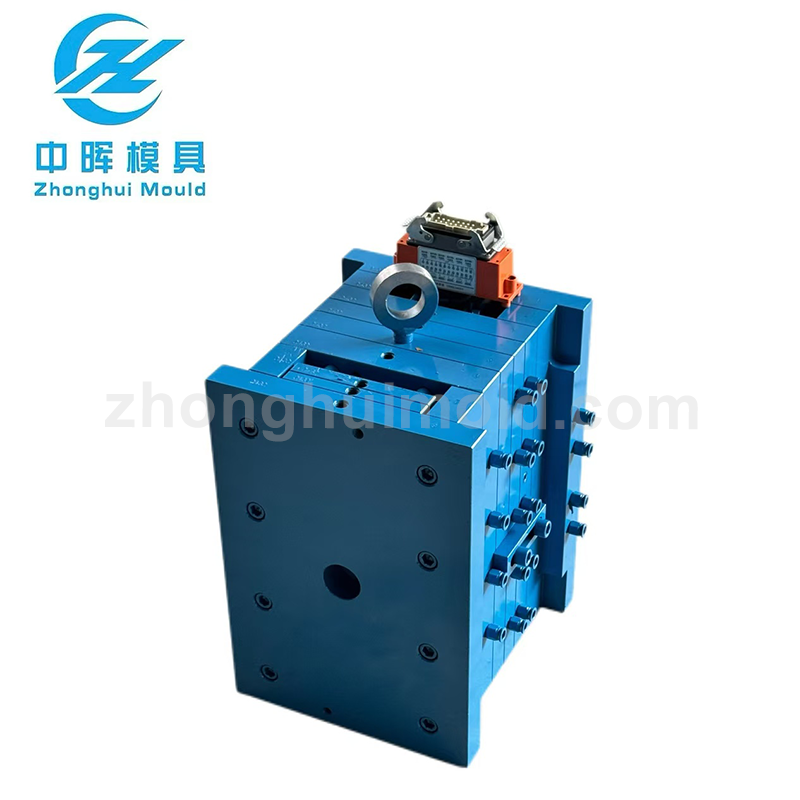
If you are searching for plastic injection mould where to buy custom tooling, you are likely comparing suppliers, evaluating manufacturing options, and looking for a reliable way to move from concept to production.
Custom tooling for plastic injection molding is the foundation of high-volume, repeatable, and cost-efficient part production. Whether you need a prototype mold, low-volume production tool, or multi-cavity injection mold for mass manufacturing, understanding the buying process is essential.
This guide explains what custom injection tooling is, where buyers typically source it, what specifications matter, how to compare options, and which factors affect quality, cost, and lead time.
It is written for companies, engineers, product developers, purchasing teams, and B2B buyers looking for SEO-friendly, industry-focused information about custom plastic injection tooling without specific company recommendations.
Custom plastic injection tooling refers to the specially designed mold tools used to manufacture plastic parts through the injection molding process.
The tooling is built to match a specific part geometry, material requirement, tolerance range, surface finish, and production volume.
Unlike off-the-shelf products, custom tooling is engineered around your exact component design.
In simple terms, the mold is the “shape maker” of the injection molding process. Molten plastic is injected into the cavity, cooled, and then ejected as a finished part.
The quality of the mold directly affects part accuracy, cycle time, surface appearance, durability, and long-term production stability.
Buyers searching for where to buy custom tooling for plastic injection moulding are usually seeking one or more of the following:
Custom tooling is one of the most important investments in plastic part production. A well-designed mold can reduce scrap, improve consistency, shorten cycle times, and lower the total cost per part.
A poor mold design, by contrast, can lead to flash, warpage, sink marks, short shots, poor gate placement, long cycle times, and expensive maintenance.
For businesses comparing plastic injection mould custom tooling options, the main advantage is control. You can control part geometry, material behavior, production output, and quality standards.
This makes custom tooling the preferred route for many industrial, consumer, medical, automotive, electronics, and packaging applications.
There are several common channels where buyers can buy custom tooling for plastic injection molding.
Each source has different strengths depending on budget, complexity, timeline, and production volume.
| Source Type | Typical Use Case | Main Advantages | Common Considerations |
|---|---|---|---|
| Injection mold manufacturers | Custom molds for production parts | Direct mold building, technical expertise, better design control | Requires clear specifications and engineering support |
| Tooling suppliers | General tooling procurement and mold sourcing | One-stop procurement, project management, sourcing support | May involve subcontracted mold making |
| Contract manufacturers | Molding plus tooling in one package | Integrated manufacturing, production-ready support | Tool ownership and transfer terms must be reviewed carefully |
| Industrial marketplaces | Broad supplier discovery and price comparison | Easy search, multiple quotes, fast supplier screening | Quality varies; due diligence is essential |
| Local mold shops | Small to medium tooling jobs, fast communication | Direct collaboration, faster meetings, easier travel | May have limited capacity or specialized equipment |
| Overseas tooling sources | Cost-sensitive custom mold projects | Competitive pricing, broad manufacturing capabilities | Lead time, shipping, communication, and inspection planning are important |
In practice, buyers often compare several of these channels before deciding where to buy custom tooling.
The best source is not always the cheapest one. The best source is the one that delivers the right balance of cost, quality, technical support, and delivery reliability.
Understanding tooling types helps buyers make more accurate sourcing decisions.
The type of mold you need affects tooling cost, maintenance, production speed, and part quality.
| Tooling Type | Description | Best For | Key Benefits |
|---|---|---|---|
| Prototype mold | Low-cost or fast-turn mold for design testing | Early-stage product validation | Faster lead time, lower investment |
| Bridge tooling | Intermediate tooling between prototype and production | Short-to-medium production runs | Balances speed and durability |
| Production mold | Long-life mold for repeated manufacturing | High-volume production | High consistency, better long-term value |
| Single-cavity mold | One part per molding cycle | Large parts or low-volume orders | Simpler design, lower initial cost |
| Multi-cavity mold | Multiple parts per cycle | Mass production | Lower unit cost, higher throughput |
| Family mold | Multiple different parts in one mold | Related component sets | Efficient for part families, but more complex |
| Insert mold | Plastic molded around a pre-placed insert | Metal-plastic combinations | Strong assembly integration |
| Overmold tool | Second material molded over a base part | Soft-touch grips, seals, multi-material parts | Improved function and product appeal |
When evaluating plastic injection mould where to buy custom tooling, focus on supplier capability rather than marketing claims.
The right supplier should understand not only tool construction, but also material behavior, mold flow, part design for manufacturability, and production troubleshooting.
Important selection criteria include:
Buyers should also confirm whether the supplier can provide complete tool ownership terms, mold storage options, spare parts, and post-delivery support.
These details are especially important for long-term production programs.
A well-prepared specification package improves quotation accuracy and reduces delays.
Before requesting quotes for custom injection tooling, prepare as much technical data as possible.
| Specification | Why It Matters | Example Information |
|---|---|---|
| 3D CAD file | Defines part geometry and dimensional intent | STEP, IGES, X_T, or similar format |
| 2D drawing | Shows critical dimensions and tolerances | Dimensional notes, GD&T, section views |
| Plastic material | Impacts shrinkage, flow, heat resistance, and tool design | ABS, PP, PC, nylon, POM, TPU, etc. |
| Annual volume | Determines mold life and cavity count | 10,000 units, 100,000 units, or more |
| Surface finish | Influences polishing, texture, and tooling detail | Gloss, matte, SPI standard, EDM texture |
| Tolerance requirements | Defines machining precision and inspection needs | ±0.05 mm, tighter on critical features |
| Part application | Determines performance expectations | Consumer, industrial, automotive, medical |
| Color and resin additives | May affect shrink rate, appearance, and flow | Glass-filled, flame-retardant, UV-stabilized |
| Packaging and shipping needs | Important for tooling delivery and handling | Crating, corrosion prevention, export packing |
Mold material selection strongly influences tool life, maintenance frequency, and cost.
Different steels and aluminum grades are used depending on the product requirements and expected production cycle.
| Tool Material | Typical Characteristics | Common Applications |
|---|---|---|
| Aluminum | Fast machining, lower cost, shorter tool life | Prototypes, short production runs |
| P20 steel | Good machinability, moderate hardness, widely used | General production molds |
| H13 steel | High hardness and better heat resistance | High-volume and demanding applications |
| S136 stainless steel | Excellent corrosion resistance and polishability | Medical, transparent parts, corrosion-sensitive projects |
| NAK80 or similar pre-hardened steel | Good surface finish and stable machining behavior | High-appearance parts |
The right choice depends on expected mold life, part complexity, resin type, and cosmetic requirements.
For example, corrosive materials and high-gloss parts often require more specialized steel selection.
Buyers often choose custom injection tooling because it offers strong long-term value.
Although the initial mold investment can be significant, the benefits often outweigh the cost in production settings.
The cost of custom plastic injection mold tooling varies widely. There is no fixed price because every project has different technical and production requirements.
However, several key factors consistently affect mold pricing.
| Cost Factor | Impact on Tooling Price |
|---|---|
| Part size | Larger parts require larger molds, more material, and more machining time |
| Part complexity | Undercuts, threads, sliders, and lifters increase tooling cost |
| Cavity count | More cavities increase cost but can reduce unit cost over time |
| Surface finish | High-polish or textured finishes require additional processing |
| Material choice | Tool steel selection affects machining difficulty and lifespan |
| Tolerance level | Tighter tolerances require higher precision and more inspection |
| Tool life requirement | Long-life production molds generally cost more than prototype tools |
| Hot Runner system | Can increase upfront cost while improving efficiency and reducing waste |
| Cooling complexity | Advanced cooling channels or optimized temperature control add value and cost |
| Lead time | Urgent jobs may require expedited processing and premium pricing |
A low tooling quote is not always the best value. Buyers should look at lifecycle cost, not just purchase cost.
A slightly more expensive mold can sometimes produce better parts, require less maintenance, and run more efficiently over time.
The process of buying custom tooling is usually structured and engineering-driven.
A clear workflow helps reduce risk and improves final mold quality.
Quality control is central to successful mold buying. A strong mold supplier should provide inspection and verification throughout the project.
| Quality Check | Purpose | Typical Method |
|---|---|---|
| Dimensional inspection | Confirms mold components match design requirements | CMM, calipers, micrometers |
| Trial sampling | Verifies part quality under real molding conditions | Injection test shots, first article inspection |
| Surface inspection | Checks polish, texture, and visual defects | Visual inspection, finish comparison |
| Tool fitting test | Ensures mold halves and moving parts operate correctly | Assembly and mechanical testing |
| Leakage and cooling verification | Ensures stable operation and efficiency | Pressure test, thermal review |
When multiple suppliers submit quotes, compare more than the headline price.
Use a structured quote comparison to identify hidden risk and long-term value.
A complete quote should be transparent, technically detailed, and easy to review.
If details are missing, request clarification before placing an order.
For content planning, directory pages, and blog optimization, the following related search phrases are commonly used by buyers:
Using these terms naturally within headings, body content, metadata, and FAQ sections can help improve search relevance for B2B audiences.
To reduce risk and improve results, follow these best practices when sourcing custom tooling.
These practices apply whether you buy tooling locally, domestically, or overseas.
They are especially important for complex molds, tight-tolerance components, and products with strict quality requirements.
Custom plastic injection molds are used across many industries.
Each industry may have different standards for surface quality, dimensional control, material performance, and compliance.
| Industry | Typical Mold Requirements |
|---|---|
| Consumer products | Attractive finish, fast cycle time, cost-effective tooling |
| Automotive | High durability, dimensional stability, repeatable production |
| Medical | Cleanability, precision, material traceability, consistent quality |
| Electronics | Tight tolerances, fine features, good cosmetic surface control |
| Industrial equipment | Strength, wear resistance, performance under demanding conditions |
| Packaging | High-volume output, low unit cost, efficient cycle times |
If you are researching plastic injection mould where to buy custom tooling, the best approach is to evaluate supplier capability, technical communication, tooling quality, and long-term value.
Custom injection tooling is a strategic investment that affects product quality, manufacturing speed, and profitability.
Whether you source from mold manufacturers, tooling suppliers, contract manufacturers, marketplaces, or local mold shops, the key is to match the supplier’s strengths with your product’s requirements.
Prepare clear specifications, request detailed quotes, review DFM feedback, and verify mold trial results before approving production.
By understanding tooling types, materials, cost drivers, and sourcing channels, buyers can make better decisions and build a reliable foundation for plastic part production.
For businesses seeking scalable manufacturing, custom injection mold tooling remains one of the most effective and widely used production methods in the plastics industry.
It is a specially designed mold used to manufacture a specific plastic part with a defined shape, material, tolerance, and production volume.
Common sources include mold manufacturers, tooling suppliers, contract manufacturers, local mold shops, industrial marketplaces, and overseas tooling providers.
You usually need CAD files, drawings, material selection, annual volume, tolerance requirements, surface finish details, and any special production notes.
Cost depends on part complexity, size, cavity count, mold material, tolerance, surface requirements, and expected mold life.
Foshan Zhonghui Mold Technology Co., LTD در شهر فوشان، استان گوانگدونگ، چین واقع شده است. کارخانه ما بیش از 23 سال در طراحی و ساخت قالب درزگیر سیلیکونی تخصص دارد و کارگاه تولید توسط تیمی با تجربه ساخت حرفه ای هدایت می شود.
DI Tianq UN منطقه صنعتی، شهرک نصب، منطقه C سئول، شهر کوهستانی Fo، استان ساختمان GU plan G، چین (Fo Mountain z Red Club mol کارخانه) را ببینید.
1415806738@qq.com
+86 13516637833/ +86 15916149052


حق چاپ © 2026 Zhonghui Mold Technology Co., Ltd
نقشه سایتاین وب سایت از کوکی ها استفاده می کند تا اطمینان حاصل شود که بهترین تجربه را در وب سایت ما به دست می آورید.
 English
 العربية
 ไทย
 हिन्दी



 تلفن
اظهار نظر
(0)